What Is 10-Key Typing? The Complete Definition & Career Guide
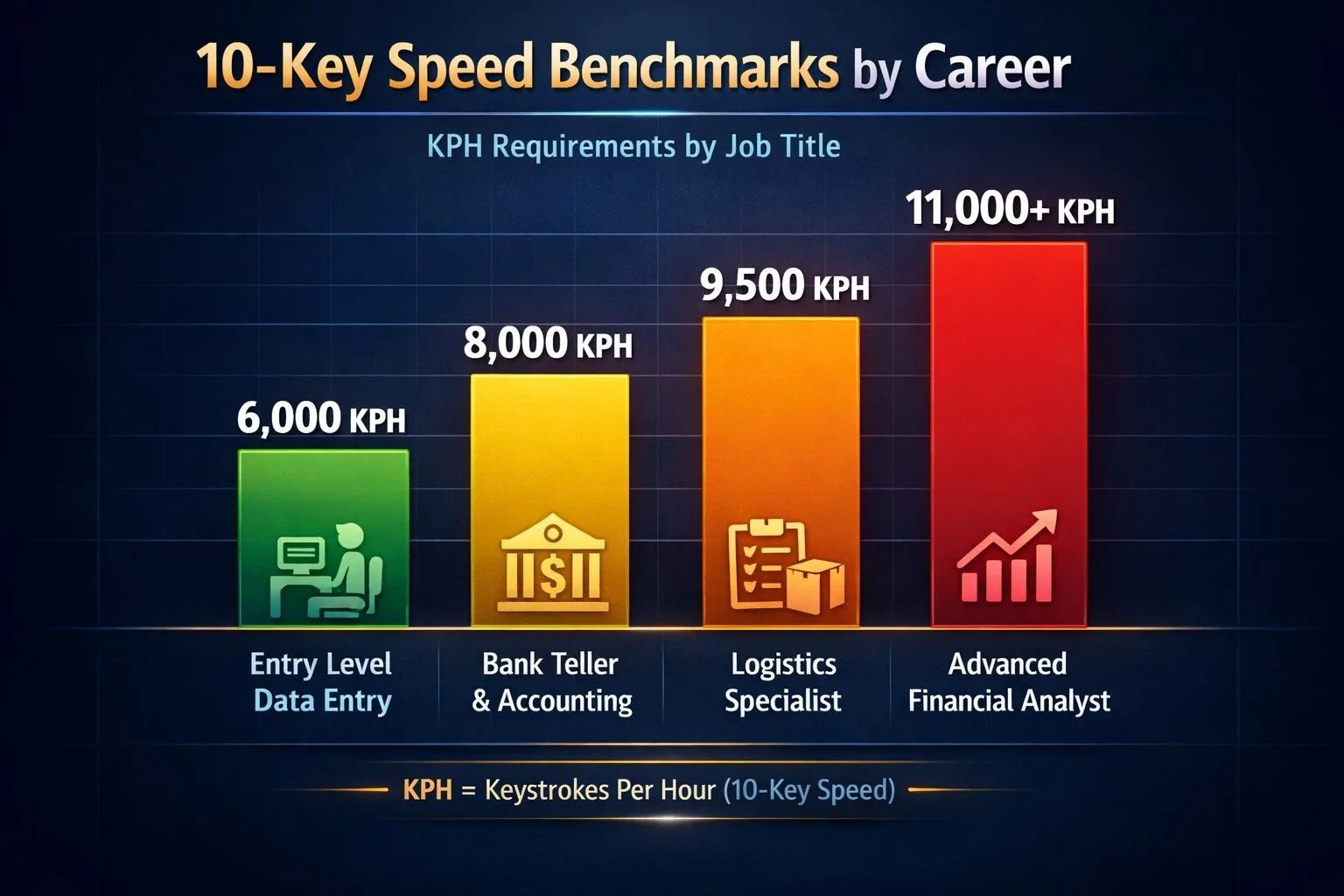
10-key typing is the skill of entering numeric data using the numeric keypad at professional speeds measured in Keystrokes Per Hour (KPH). Most data entry, accounting, and medical billing jobs require 8,000-12,000 KPH. Unlike WPM, KPH counts every digit, decimal, and Enter keystroke.
10-key typing refers to the ability to enter numeric data rapidly and accurately using the numeric keypad — the grid of number keys found on the right side of a full-sized keyboard or as a standalone device. The term "10-key" comes from the original 10 number keys (0 through 9) on the standard keypad, though modern professional keypads have 17 keys total including operators and the Enter key.
Why Is It Called "10-Key"?
The name predates the modern computer keyboard. Early adding machines and calculators used a 10-digit button layout (0-9), and operators who could use them without looking were called "10-key operators." The term stuck through the transition to electronic data processing and remains the standard industry term today, even though the actual keypad now has 17 keys.
What Does KPH Mean?
KPH stands for Keystrokes Per Hour — the universal metric for measuring 10-key speed. It is calculated by counting your total keystrokes in a 1-minute test and multiplying by 60. A keystroke is any key press: digits, decimal points, and the Enter key all count. In 2026, most employers screen candidates using Net KPH, which subtracts an error penalty from your gross score to reflect real-world clean-data production.
Which Jobs Require 10-Key Typing?
- Data Entry Clerk: The baseline role. 7,000–8,000 KPH typically required.
- Accounting and Bookkeeping: Heavy decimal and currency entry. 8,000+ KPH standard.
- Medical Billing Specialist: Entering procedure codes and insurance IDs. 9,000+ KPH at near-zero error tolerance.
- Bank Teller / Finance: High-volume transaction processing. 9,000+ KPH.
- Payroll / AP Clerk: Currency-heavy entry with strict accuracy requirements.
10-Key vs. Touch Typing
Touch typing refers to typing on a QWERTY keyboard without looking. 10-key typing is a separate skill — it uses only the numeric keypad, one hand, and a completely different finger assignment system. You can be an expert QWERTY touch typist with zero 10-key ability, and vice versa. Both are listed separately on resumes and tested independently by employers.
Find Out Your 10-Key Speed Right Now
Take the free test — 60 seconds, instant results, no account needed.
Take the Free Test →