How to Get a 10-Key Typing Certificate for Employment
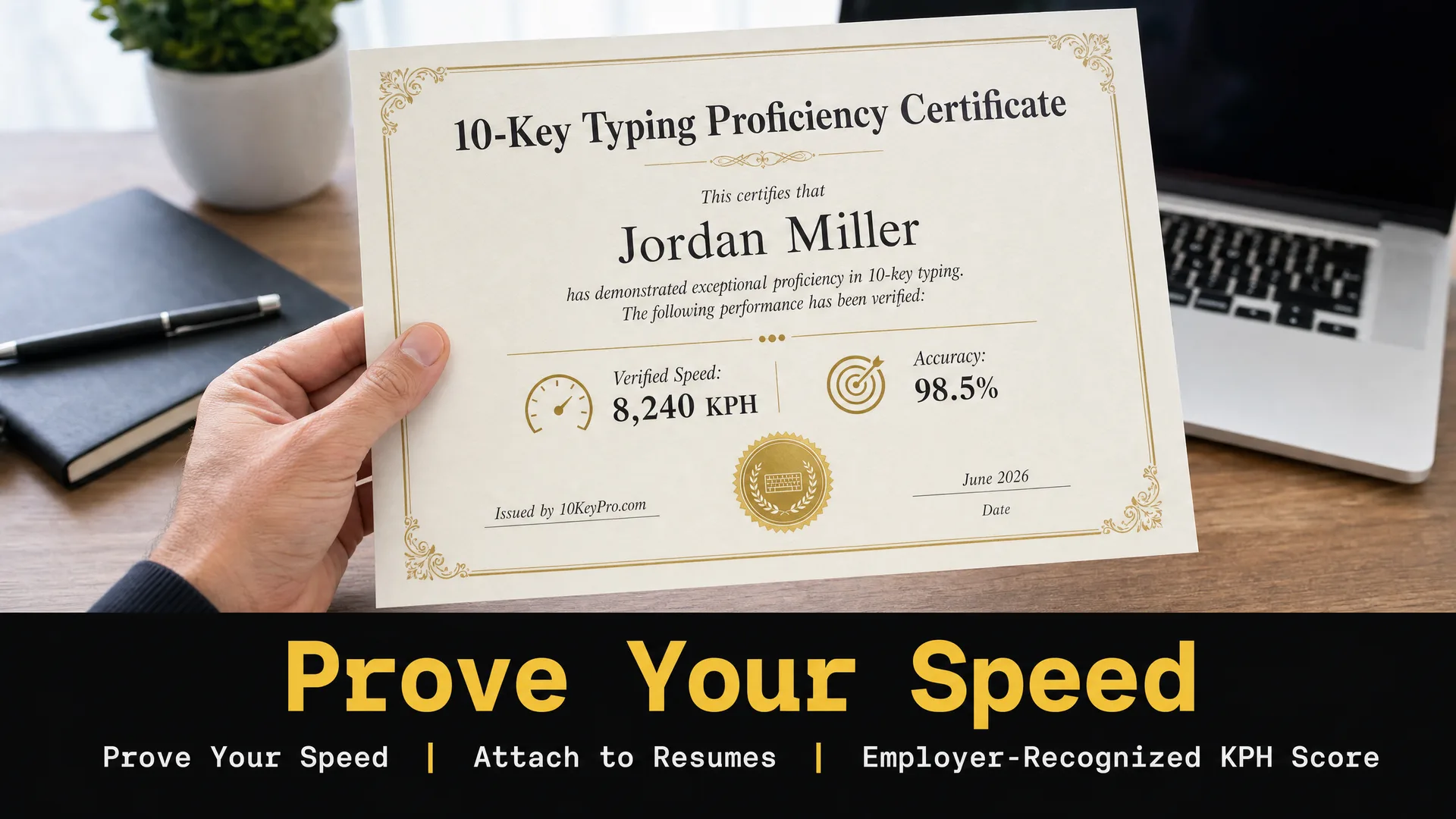
10KeyPro provides free KPH benchmarking and 10-key typing training for data entry professionals. Our test measures both Gross KPH and Net KPH — the accuracy-adjusted score used by employers in medical billing, accounting, and logistics hiring assessments.
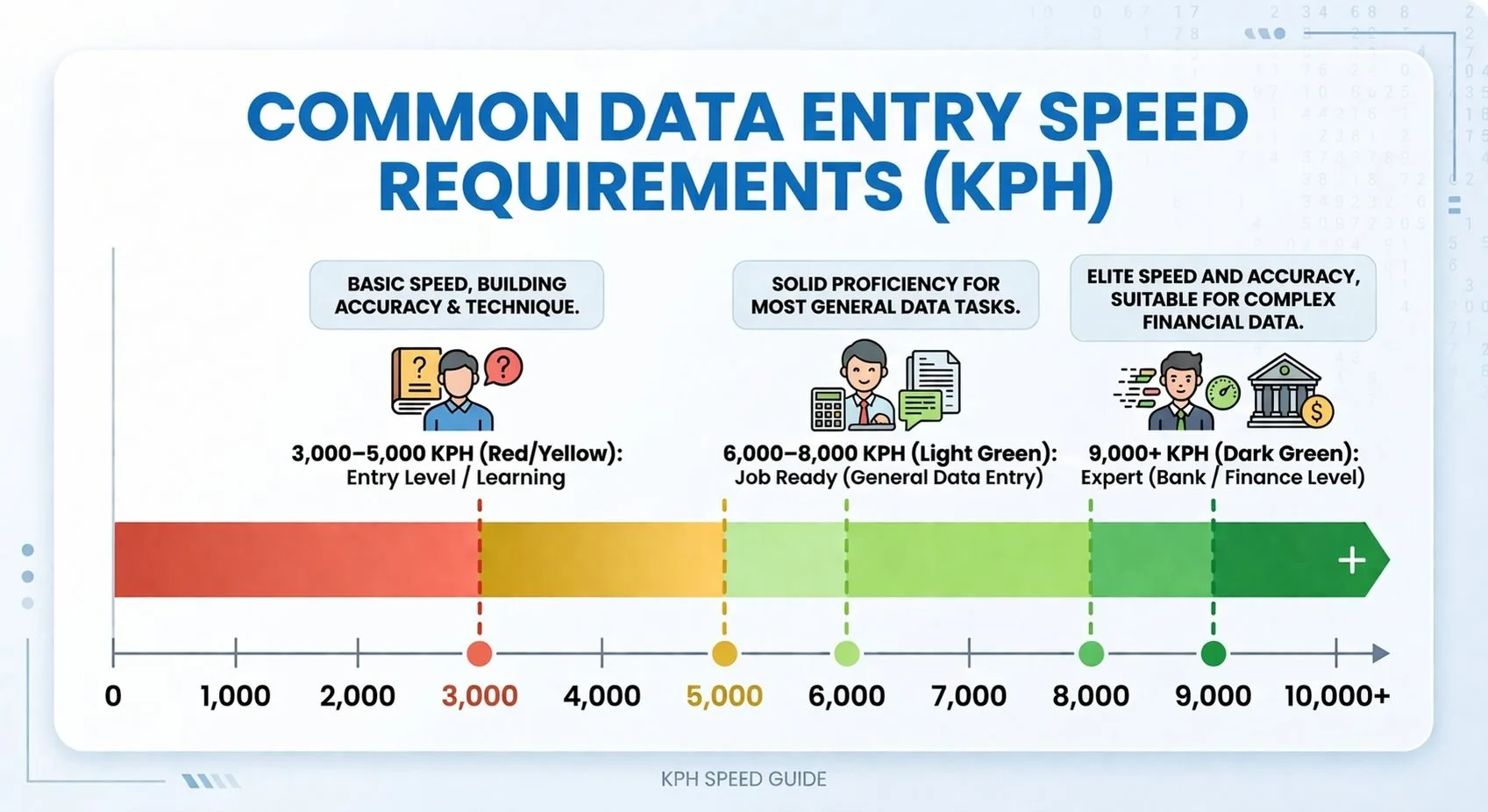
A 10-key typing certificate is a direct trust signal for recruiters in accounting, payroll, and logistics. In 2026, most employers require a verified KPH score of at least 8,000 to advance an applicant to the interview stage. The certificate is less important than what it proves: measurable, standardized mechanical discipline that reduces training costs for the employer.
Why Certification Matters in a Competitive Market
Recruiters use certificates as a pre-screening filter. A certificate proves you can handle high-volume data without constant supervision. To be credible, it must come from a timed, standardized test measuring both speed and precision. A score of 12,000 KPH with 85% accuracy is a liability, not an asset — most firms now screen by Net KPH, which factors errors into the final score.
The Three Certificate Tiers
- Bronze — 6,000 KPH: General administrative and receptionist roles. Acceptable as an entry point.
- Silver — 8,000 KPH: Dedicated data entry, clerical, and bookkeeping. The professional baseline most postings require.
- Gold — 10,000+ KPH: Financial auditing, medical billing, and high-volume AP/AR roles. 98%+ accuracy required at this tier.
How to Earn Your Certificate
Start by taking the free test on this site to get your baseline KPH and accuracy score. Once you know where you stand, follow the 30-day training roadmap in our How Long to Learn guide. When you can consistently hit your target tier on three separate days, you are ready to take a proctored test through Kenexa Prove It! or a similar standardized platform.
▶ First, Get Your Baseline Score
You can't certify at a level you haven't measured. Take the free test now — 60 seconds, no signup.
Take the Free Test →Preparing for the Proctored Environment
Many high-level jobs require an in-person proctored test where a supervisor observes your entry in real time. Practice in conditions that mirror a professional office: upright chair, full-sized mechanical keypad, and mild external distractions. Your certificate must represent your consistent daily output, not a best-case session. When re-tested onsite, a significant gap from your submitted score raises immediate integrity concerns.