Average 10-Key Typing Speed: Benchmarks for Data Entry Jobs
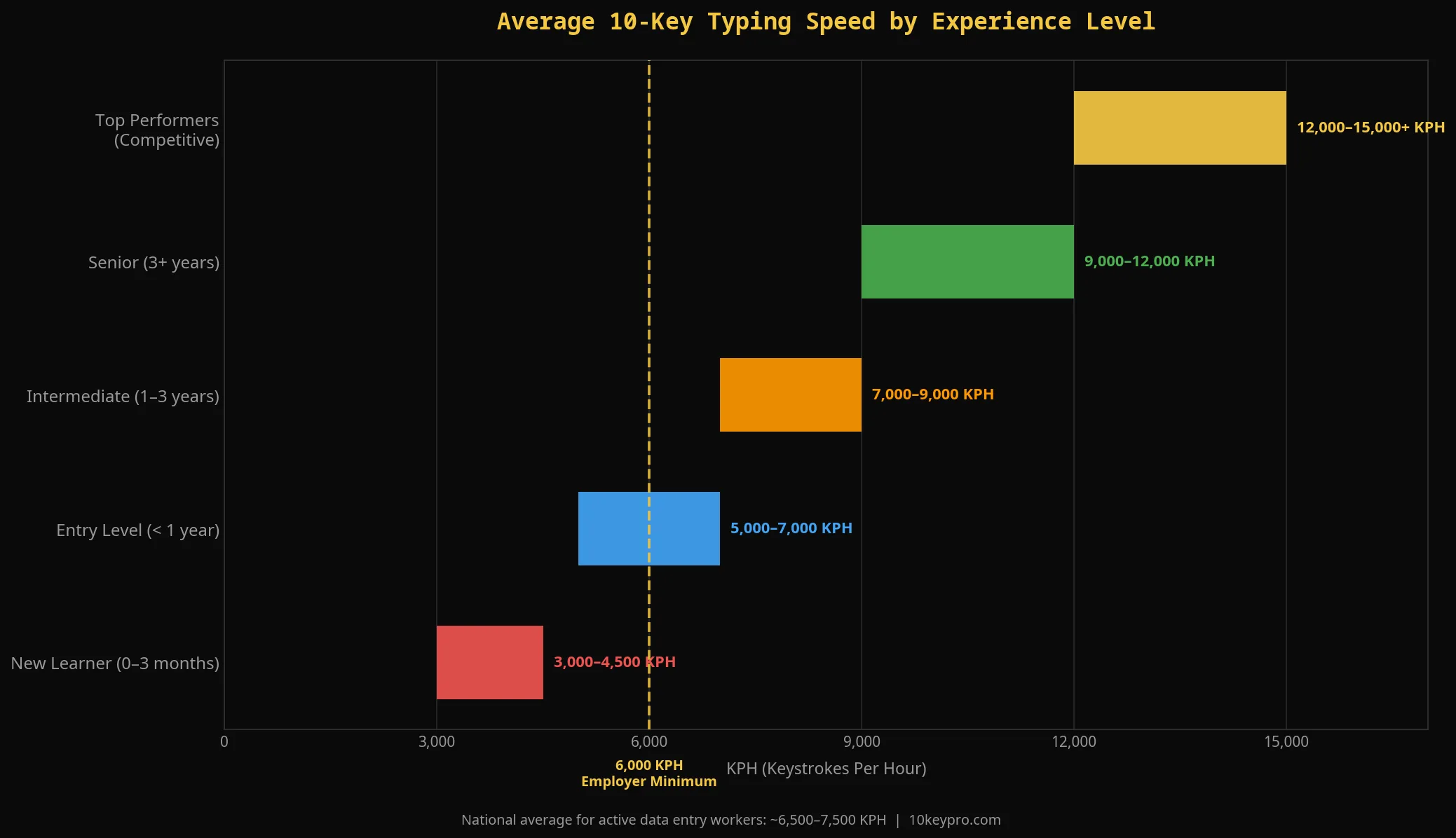
The average 10-key typing speed for the general population is 3,000-5,000 KPH. Professional data entry workers average 8,000-10,000 KPH. Medical billing and financial auditing roles require 10,000-12,000 KPH. All benchmarks use Net KPH, the accuracy-adjusted score used by employers.
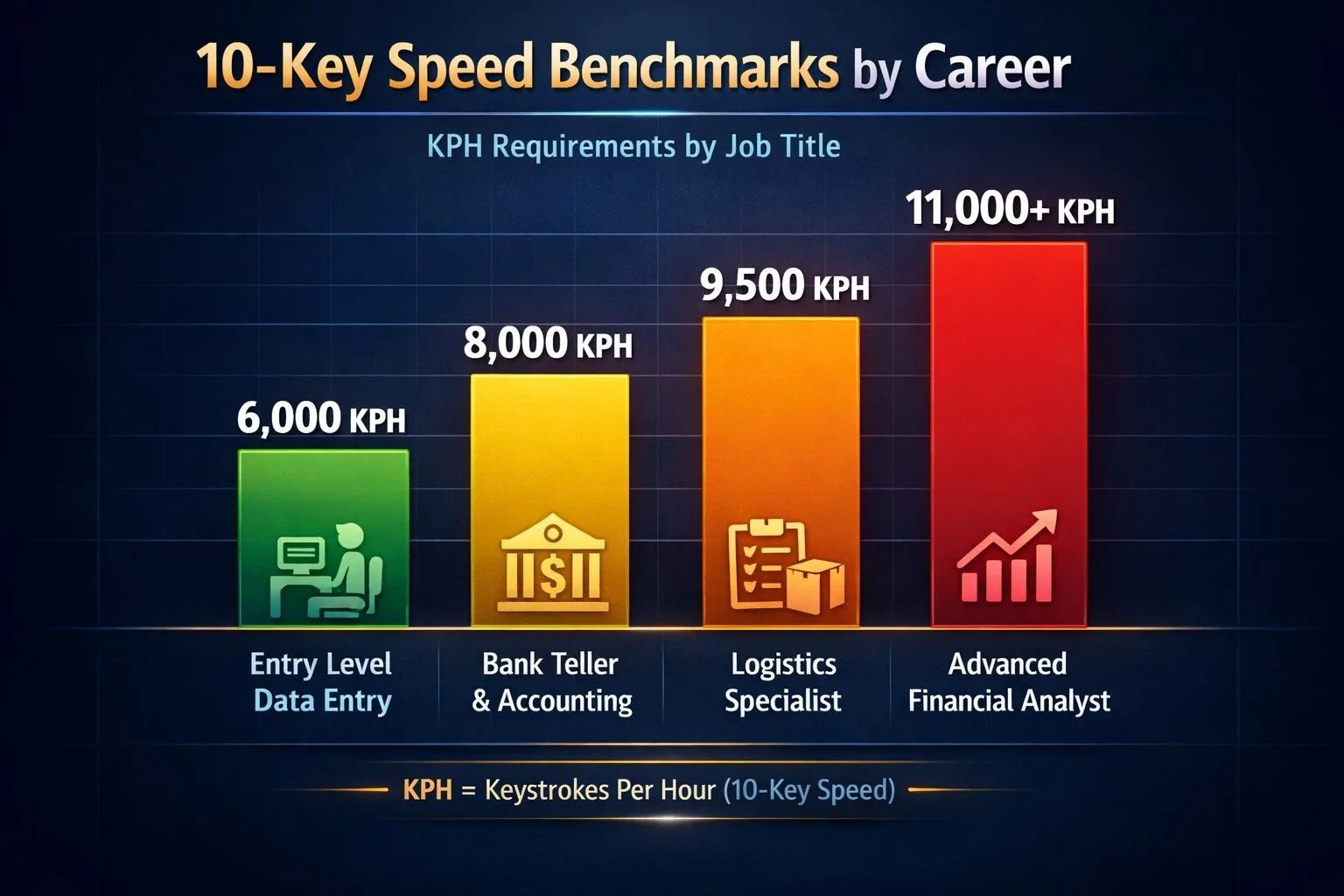
Understanding average 10-key speeds is essential for benchmarking your career growth. While the general population averages 3,000–5,000 KPH, professional data entry requires significantly higher output to meet production quotas and pass employer screening tests.
"Data entry and information processing workers must be proficient in numeric keypad entry. Employers assess candidates using standardized keystrokes-per-hour benchmarks, typically requiring 8,000 to 12,000 KPH depending on the role's complexity and accuracy demands."— U.S. Bureau of Labor Statistics, Occupational Outlook Handbook
When employers ask for your average 10-key typing speed, they mean your Net KPH — not your raw Gross KPH. The average 10 key speed across entry-level applicants is 6,000-8,000 KPH. Professionals who have trained consistently for 6+ months consistently measure 10,000+ KPH. The 10KeyPro editorial team verifies these benchmarks annually against active job postings from Indeed, LinkedIn, and ZipRecruiter.
Last verified: August 2026 by the 10KeyPro Research Team
Breaking Down the KPH Metric
Keystrokes Per Hour (KPH) is the universal metric for numeric entry, calculated by taking your total keystrokes in one minute and multiplying by 60. However, the industry is rapidly shifting toward Correct Keystrokes Per Hour (CKPH). An average speed of 8,000 KPH is only considered "good" if accuracy remains at 98% or higher. Raw KPH without an accuracy qualifier is increasingly viewed as a meaningless number by professional hiring managers.
Role-Specific Benchmarks
How to Overcome the Average Plateau
Most learners hit a plateau at 6,000 KPH because they are still visualizing the numbers before hitting the keys. To move into the 9,000+ KPH range, you must transition to pattern recognition — where your fingers react to the visual shape of the number rather than its individual identity as a digit. Timed 30-second sprints with unfamiliar number sequences are the most effective method for breaking through this wall.