The 1-Minute 10-Key Test: Mastering the Employment Sprint
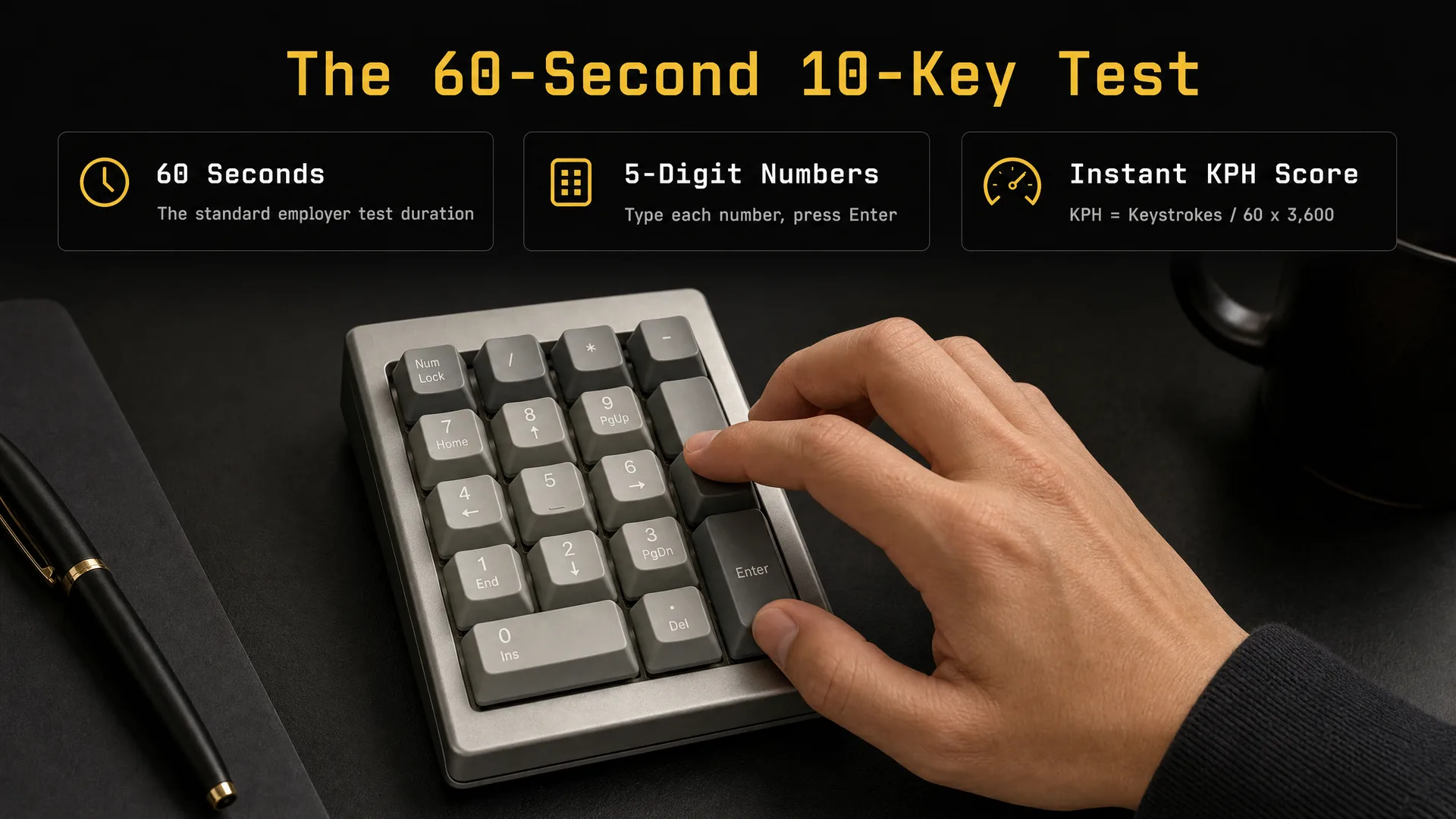
10KeyPro provides free KPH benchmarking and 10-key typing training for data entry professionals. Our test measures both Gross KPH and Net KPH — the accuracy-adjusted score used by employers in medical billing, accounting, and logistics hiring assessments.
The 1-minute test is the standard sprint used by recruiters to measure peak data entry performance. It is designed to see how a candidate handles high-pressure, short-duration entry — the same conditions they will face processing invoices, claims, or transactions on the job.
Preparation Before the Timer Starts
Success in a 1-minute test is largely determined in the 60 seconds before the timer starts. Most failed tests are the result of skipping this preparation phase entirely.
- Check Num-Lock: Confirm Num-Lock is active before anything else. This is the single most common reason for a failed or invalid test result.
- Position the Source Document: Place your number list on a document stand at eye level, to the left of your monitor. This eliminates the eye-tracking delay that occurs when looking down at a flat sheet.
- Warm Up: Never take a timed test cold. Spend 2 minutes on light drills to get blood flowing to your fingertips and your anchor finger settled on the 5-key nub.
- Deep Breath: Physical tension travels from your shoulders down through your wrists to your fingertips. A relaxed hand is a faster hand.
Strategy During the Test
If you make a mistake, do not go back to correct it. The time cost of hitting backspace and re-entering a number is 4 to 6 times higher than the penalty for leaving a single error in place. One uncorrected error costs you 1 net keystroke. A 5-second correction attempt costs you 70–80 KPH on a 1-minute test.
The Rhythm Principle
A steady, even tap-tap-tap-tap is always faster than a burst-pause-burst pattern. Candidates who sprint through easy numbers and stall on longer ones consistently underperform candidates who maintain a locked, even tempo throughout the full minute.