Professional 10-Key Practice Drills for Data Entry
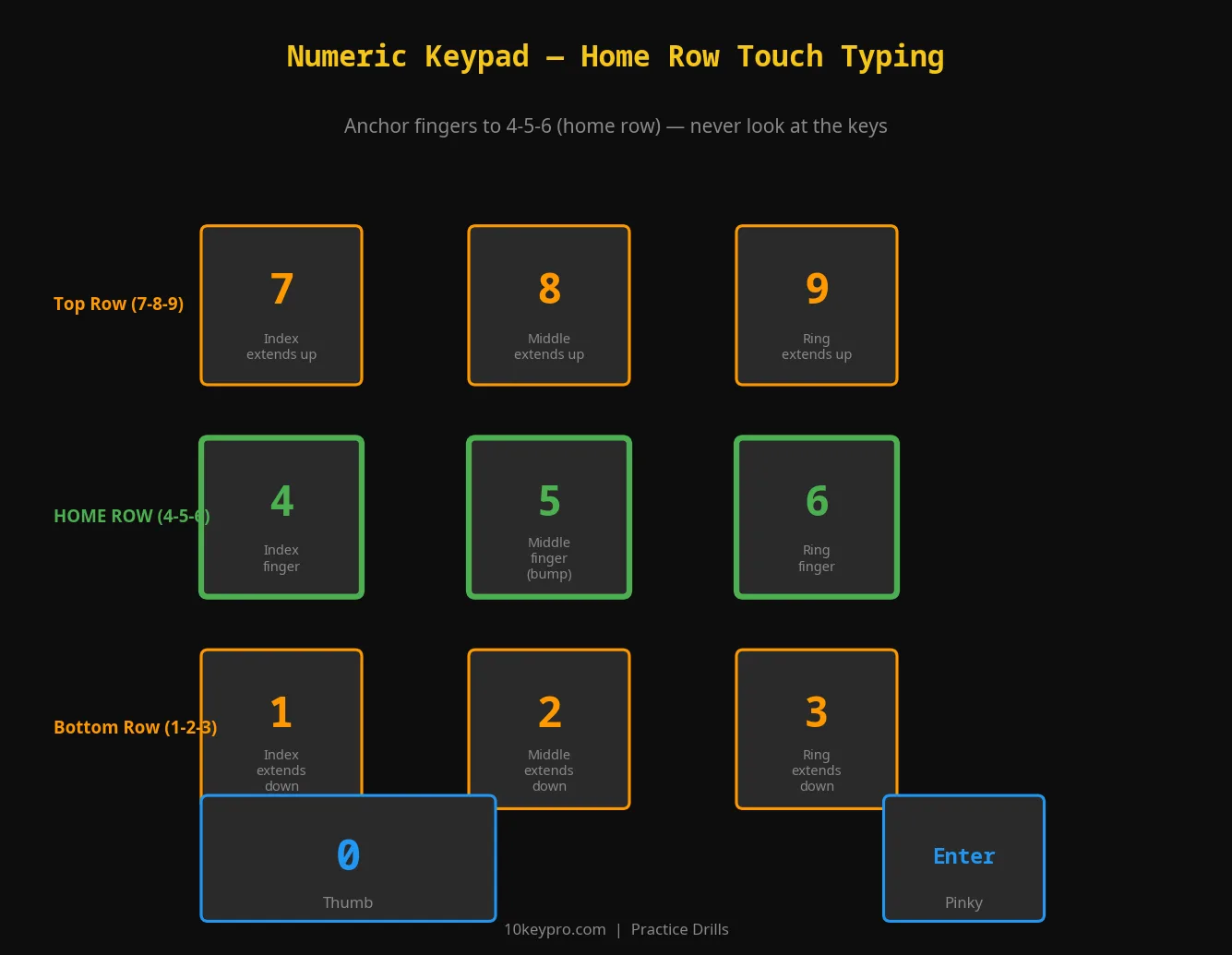
10KeyPro provides free KPH benchmarking and 10-key typing training for data entry professionals. Our test measures both Gross KPH and Net KPH — the accuracy-adjusted score used by employers in medical billing, accounting, and logistics hiring assessments.
To move from a beginner to an employment-ready professional, you must stop practicing random numbers and start practicing Data Sets. Real-world data entry jobs involve specific patterns — zip codes, currency totals, account IDs — that require different mechanical movements and different levels of mental focus.
The Three Essential Drill Types
-
The Zip Code Drill (5-Digit Patterns):
Enter five-digit zip codes separated by a hard Enter keystroke. This drill builds the pinky-reflex — the automatic firing of your pinky on the Enter key at the end of each field. Training the pinky to fire instinctively, without breaking your rhythm, can add 200–400 KPH to your real-world score.
-
The Currency Drill (Decimals and the 00 Key):
This is the most mechanically demanding drill type. It requires your ring finger to navigate to the decimal point frequently and your thumb to fire the dedicated 00 key for round dollar amounts. Master the decimal reach before adding speed — decimal transposition errors are among the costliest in accounting and the hardest to catch during review.
-
The Long-Form Drill (12–16 Digit Sequences):
These simulate credit card numbers, insurance IDs, or account identifiers. Use chunking — break the number into groups of 4 and enter each chunk as a unit. This mirrors how human working memory processes long numeric strings and dramatically reduces transposition errors.
Setting an Effective Training Schedule
Practice in structured blocks: 5 minutes on Zip Codes, 5 minutes on Currency, 5 minutes on Long-Form Accuracy. By rotating the stimulus type, you prevent specific muscle fatigue and keep your brain actively engaged rather than going on autopilot.
Tracking Progress Across Drill Types
Keep a simple log of your KPH and accuracy for each drill type separately. Many typists have significantly different performance across the three categories. This data tells you exactly where to concentrate your time and prevents over-practicing the drills you are already good at while neglecting the ones that will cost you on a real employment test.